Volunteering for Interreg AQUAMAN
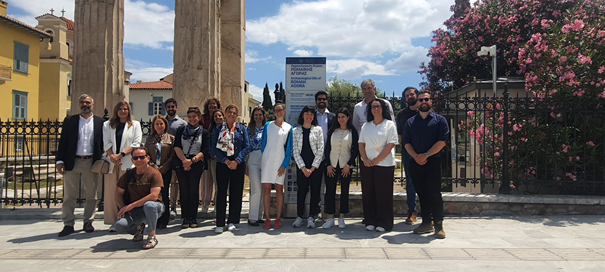
Hi I’m Ornella, currently volunteering as IVY with SMILO (Small Islands Organisation) in Marseille as part of the AQUAMAN project, supported by Interreg EURO-MED. Thanks to IVY, I had the incredible opportunity to go to Athens with SMILO during my first week of volunteering in May. I assisted and got straight to the heart of the matter by attending the 9th edition of Circle The Med forum focused on climate neutrality, green transition, and sustainable development. The aim was to address circular and blue economies under the Union for the Mediterranean but also to work and progress on AQUAMAN project with our European partners. But why this project (which is not a superhero)? AQUAMAN (AQUAtic systems’ evaluation for the Mitigation of wAter scarcity in mediterranean islaNds and coastal tourist destinations under severe pressure) is a collaborative project uniting partners from Mediterranean countries (as one of the world’s most climate-sensitive regions) and includes ministries, research bodies, island municipalities and others such as associations. The aim is to promote sustainable water management on European small islands which are facing an important touristic pressure, specially during summer. My main role is to support the SMILO team on this European project which includes a cooperation between six European countries: Italy, Spain, Greece, France, Malta and Portugal. To reach the AQUAMAN goals we are all working together to benchmark existing solutions to improve water management in different territories. For this purpose, SMILO has different missions to promote sustainable actions through our islands network. The following highlights some noteworthy examples. We are currently working with Greeks to develop solutions for a better water infiltration on islands inspired from ancient practices. I am also creating with the help of Spanish and Maltese contributors a Women island network to promote the work accomplished by European female islanders. Besides SMILO developed new links with some islands, notably thanks to AQUAMAN project, we are working with the Ponza island in Italy and Halki in Greece so that they can enter the SMILO network, in addition to making progress in the water management field. Finally, in Porquerolles island in France (next to Marseille) we want to work with a study office to look into the hydrology of the island so that we could help the stakeholders to develop actions for a better management of the resource. Recently, Porquerolles welcomed more than 50 international students on the island for a Science and Policy Workshop, SMILO had the opportunity to present the SERIOUS GAME developed in partnership with the French “Conservatoire du littoral” to raise awareness on water scarcity on islands. The overall objectives of AQUAMAN project is that all the work done benefits to stakeholders of the islands, obviously for generations to come and local residents who suffer from tourism pressure and already limited water supplies. The sharing of knowledge from successful EU initiatives helps to support coastal and island authorities in adopting sustainable practices. Thanks to this unique experience, I have now a clearer sense of how EU-funded projects operate. It demonstrates the power of Europe and how it helps partners from different countries to cooperate across boundaries. Volunteering helps me to develop several of my skills and to live unique experiences on different sites. I am so happy to help to safeguard precious water resources and protect the Mediterranean’s unique lifestyle and environment. As I am a scientist it also allows me enlarging my skills about cooperation and European affairs. – Ornella, IVY Project Partner at SMILO, for the Interreg project AQUAMAN, under the programme Interreg Euro-MED.
Behind the Scenes of European Territorial Cooperation: My IVY Experience at theNational Contact Point of the Interreg Euro-MED Programme
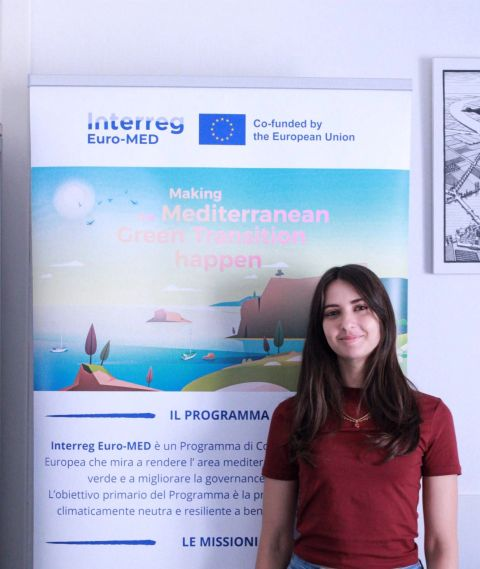
Hello everyone! My name is Claudia, I’m 25 years old, I’m from Italy and I’m currently an IVY Reporter at the italian National Contact Point of the Interreg Euro-MED programme, hosted by Regione Toscana, in the beautiful city of Florence. Having a background in International Cooperation and Development, I have always been particularly interested in the dynamics of European cooperation. For years, both professionally and personally, I’ve been passionate about two things: European Cohesion Policies and Mediterranean history, culture and nature. Fair to say that the programme I’m currently working on is the perfect combination of these two aspects. What is the Interreg Euro-MED Programme? Euro-MED is a Territorial Cooperation Programme that covers the territories along the northern coast of the Mediterranean, bringing together a total of 69 regions from 10 European countries and 4 IPA countries (EU candidate countries). Like other Interreg programmes, Euro-MED is one of the ways in which the European Union promotes the objectives of European Cohesion Policy, focusing on enhancing a sustainable economy and tourism, protecting natural heritage and promoting green living areas. What about the Italian National Contact Point? The Italian National Contact Point (NCP) is the main point of reference for all Italian beneficiaries of the Euro-MED programme and is currently managed by Regione Toscana (Region of Tuscany). The NCP provides support on the technical and administrative requirements for the implementation of the programme and contributes to its promotion, providing information on funding calls and opportunities. My tasks? As an IVY reporter, my role mainly focuses on supporting communication and dissemination activities. Over the past three months, I have primarily been working on the creation of a newsletter, promotional content, as well as social media activities and campaigns. Recently, I’ve been working on communication related to the 7th Euro-MED call within the Mediterranean Multi-Programme Mechanism (MMM), an initiative that aims to connect projects from 10 different Interreg Programmes, also covering territories in partner countries outside the EU. The focus is on sustainable tourism, a topic I feel particularly connected to, as the effects of mass tourism are extremely visible, especially across the European Mediterranean region. My Experience What I have appreciated the most about this experience is, first of all, the opportunity to work behind the scenes of European territorial cooperation mechanisms, attending meetings, discussions and exchanges involving different stakeholders, both Italian and European. Equally important has been the great collaboration with the team at my host organisation, who have supported and trained me, introducing me to the functioning and the objectives of the programme. Most importantly, they have given me the opportunity to express my creativity in communication and to contribute with my own ideas and perspective. – Claudia Zorzetto, IVY Reporter at Regione Toscana, National Contact Point for the Programme Interreg Euro-MED.
My Experience with the “Desafios Jovens” Volunteership Progra

Hello everyone! My name is David, and I’m a 20-year-old law student from Santiago de Compostela, Galicia. I’m currently volunteering as an IVY Project Partner for the Interreg “Desafios Jovens” program.The General Directorate of Youth is my host organization, a department of the regional government of Galicia which develops several programs for the Galician youth. What is “Desafios Jovens” About?The “Desafios Jovens” project aims to promote quality employment and improve working conditions within the Galicia-North Portugal euroregion. It places a strong emphasis on supporting rural youth as well as green and social economy. Who’s Involved?This collaborative effort involves five main partners: General Directorate of Youth (Galicia) Official Chamber of Commerce, Industry, Services and Navigation from Santiago de Compostela (Galicia) Northern Regional Directorate of IPDJ (Portugal) National Federation of Youth Associations (FNAJ) (Portugal) Northern Regional Delegation (Portugal) How Are We Making an Impact? One of our key initiatives has been the itinerant office, which has visited several rural areas across Galicia. Its purpose is to provide young people with valuable information about job opportunities in both Galicia and Portugal, offer guidance on personal brand improvement, and provide training in digital competencies. My Role as a VolunteerMy two months on the project have been a truly positive and enriching experience. With my background in law, I’ve been able to assist with both activity promotion and the management of contracts. I also got the opportunity of interacting with people from different countries, mainly Portugal, with the same interests in volunteering programs as me. – David, IVY Project Partner at DIRECCIÓN XERAL DE XUVENTUDE, CONSELLERÍA DE CULTURA, LINGUA E XUVENTUDE (XUNTA DE GALICIA), for the Interreg project DESAFIOS JOVENS (YOUTH CHALLENGES), under the programme Interreg POCTEP. Learn more about Xunta de Galicia Click Here Learn more about Interreg project DESAFIOS JOVENS Click Here
My Journey as an IVY Volunteer in the Interreg Euro-MED “Germ of Life” Project

My name is Yiannis, I’m 26 years old and from Greece. Over the past two months, I’ve been part of the Interreg Euro-MED Germ of Life project through the IVY (Interreg Volunteer Youth) programme. This transformative experience has allowed me to combine my climate science background with meaningful on-the-ground work, contributing to a wider Mediterranean effort focused on assessing and managing drought risk. Germ of Life: Uniting the Mediterranean for Climate Resilience The Germ of Life project is co-financed by the Interreg Euro-MED programme, bringing together ten partners from six Mediterranean European countries, namely Greece, France, Spain, Portugal, Italy and Cyprus. Its goal is the development of a digital drought risk preventative management system, focused on prediction and monitoring of drought severity, ultimately supporting ecosystem restoration and climate adaptation. This initiative combines nature-based solutions (NBS) and cutting-edge digital technology: AI-powered early-warning tools, standardized drought indicators, shared monitoring frameworks, and pilot demonstrations, designed to help make local ecosystems across the Mediterranean more resilient. Together, these efforts represent a proactive, preventive strategy for drought risk management that is grounded in data, rooted in nature, and tailored for real-world impact. And the best part? The final tools and results will be available to anyone interested, and who wants to use them. My Role: Climate Data Analysis Within this framework, I serve primarily as a meteorological and climatological data analyst, focusing on rainfall, temperature, soil moisture, drought indices, and vegetation stress indicators, derived from models, satellites and meteorological stations. My host organization, the University of Patras, acts as the project’s scientific coordinator and advisor, overseeing data curation protocols and guiding the integration of this data into AI models, helping predict drought severity, frequency, and vulnerability across the targeted landscapes. The Importance of Regional Engagement But science without community is incomplete. In Western Greece, and especially Aigialeia and the surrounding vineyard areas, we’ve launched pilot activities in collaboration with the Region of Western Greece (another major partner) and the Laboratory of Atmospheric Physics of the University of Patras. A highlight of these activities was the installation of a state-of-the-art meteorological station, that provides real-time local data, enhancing both our scientific monitoring network and the community’s understanding of environmental dynamics and climate change. Similar pilot initiatives took place, or are underway, in selected regions of Italy, Spain, and Portugal. One of the most rewarding aspects has been bringing these tools to life for local farmers and vineyard owners, whose livelihoods depend on the land and its climate stability. With the invaluable help of the region of Western Greece, and through the visualization of results and simplified, hands-on communication, we have managed to engage an even larger percentage of local stakeholders. The response has been so positive that the regional government has installed two additional meteorological monitoring stations, with further plans and requests underway to expand the network. This is great news, as it allows for a better representation of Aigialeia’s climate, that is strongly affected by its complex geography! It also showcases the importance of data-driven solutions, and how they can empower local shareholders and communities. A Personal and Professional Transformation This hands-on outreach, combined with technical work, has made my volunteering experience incredibly well-rounded. It pushed me to step outside the comfort zone of data and try to communicate complex ideas in accessible ways. What stood out the most was the shared sense of purpose. Despite the differences in background, we all recognize the urgency of protecting our ecosystems and preparing for a rapidly changing climate. And through cooperation, we’re able to develop more holistic, inclusive solutions. As “Germ of Life” progresses, I’m eager to see how our combined efforts in modeling, monitoring, and mobilizing, translate into greener, more drought-resilient communities. Personally, I’m inspired to continue on this path, blending environmental research with policy work that leads to practical, real-world impact. – Ioannis, IVY Project Partner at University of Patras, for the Interreg project GERM OF LIFE, under the programme Interreg Euro-MED. Learn more about University of Patras Click Here Learn more about Interreg project GERM OF LIFE Click Here
Article IVY experience- Cecilia Vitale

Hi, I’m Cecilia, currently volunteering with Community Land Trust Brussels as part of the Upcycling Trust project, supported by Interreg. My main role is in communication, which includes writing articles and newsletters, coordinating with partners across Europe, and helping make the work of the project more visible. The project itself focuses on making housing both permanently affordable and sustainable, by renovating existing buildings using circular methods and placing the land where they are built on, under community ownership. It’s an efficient way to link climate goals with housing justice, something that feels increasingly urgent in many European cities. A big part of what I’ve been learning comes from the constant exchange with my colleagues and the advocacy team. I’ve realised how communication isn’t just about promotion, it’s also about supporting the broader goals of the project. The way we talk about our work shapes how people understand the issues, and that’s especially important when we’re trying to influence policy. This experience has given me a clearer sense of how EU-funded projects operate, and how different partners cooperate across countries. It’s also helped me develop my skills, from writing for different audiences to managing updates across multiple pilot sites. I’m happy to be part of something that shows how local, community-driven solutions can have relevance far beyond their neighbourhoods! – Cecilia, IVY Project Partner at Community Land Trust Brussels, for the Interreg project Upcycling Trust, under the programme Interreg North West Europe. Learn more about Community Land Trust Brussels Click Here Learn more about Interreg project Upcycling Trust Click Here
My experience as an IVY Reporter in the HIBA+ project with the Finnova Foundation

Hello! My name is Nuria Oller Vivet and I am currently an IVY Reporter volunteer at the Finnova Foundation, based in Brussels (Belgium), as part of the Interreg Volunteer Youth (IVY) programme within the Hub Iberia Agrotech (HIBA+) project, a cross-border cooperation initiative between Spain and Portugal. “Interreg” refers to European Territorial Cooperation (ETC), one of the two main objectives of the European Union’s Cohesion Policy, which aims to reduce disparities between regions and countries. Interreg seeks to implement joint actions and policy exchanges between EU Member States through different programmes like ours. The main goal of the HIBA+ project is to drive the digital transformation of the agri-food sector in the Spain-Portugal cross-border region. It focuses on creating an open, collaborative and multisectoral digital innovation ecosystem that fosters entrepreneurship and the internationalisation of SMEs. As an IVY volunteer, I work closely with the communication and marketing departments, contributing to the development of the project’s communication strategy: from creating content for social media to designing graphic materials for training sessions and events, producing and recording videos for the YouTube channel, and helping organise events. All materials and actions aim to maximise the project’s outreach and reach as many beneficiaries as possible. Thanks to this experience, I have been able to strengthen key skills such as intercultural communication, digital event management, audiovisual editing, multilingual institutional writing, and teamwork in multicultural and high-pressure environments. Every day is an opportunity to learn, both on a technical and a personal level. In addition, being part of Finnova has allowed me to contribute to other European projects led by the foundation from its offices in Brussels and Spain, broadening my perspective and understanding of the European innovation and cooperation ecosystem. This experience has been key in confirming my interest in continuing to develop my career in European communication, territorial innovation, and international cooperation projects. I want to keep following this path while remaining open to exploring new sectors where I can apply what I’ve learned, continue growing, and acquire new skills. My time at HIBA+ has been enriching in every sense, and I am truly grateful for the opportunity to learn, contribute, and be part of a project with such transformative potential. – Nuria, IVY Project Partner at Finnova foundation, for the Interreg project HIBA+, under the programme Interreg POCTEP. Learn more about Finnova Foundation Click Here Learn more about Interreg project HIBA+ Click Here